
Scale of rural crime underestimated, expert tells MPs
Posted Yesterday
The breadth and scale of rural crime is being underestimated by policymakers, a Parliamentary inquiry has been told.
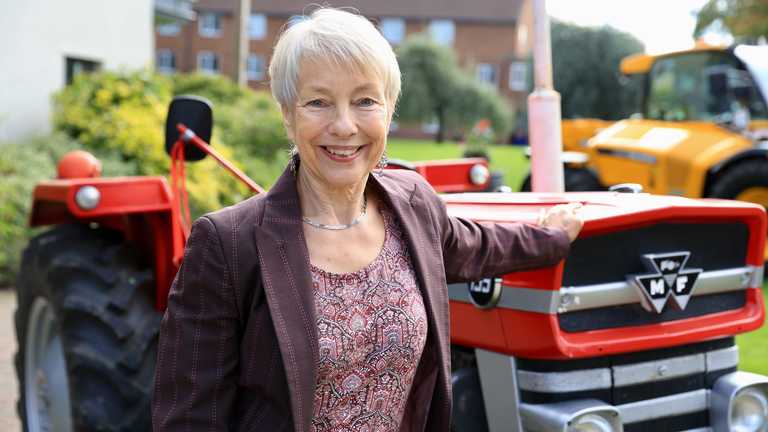
The House of Commons’ Home Affairs Select Committee heard from Harper Adams University’s Dr Kreseda Smith as part of its investigation into The impact of serious and organised crime on local neighbourhoods.
Dr Smith – an Associate Professor in Rural Criminology and Centre Lead for the Rural Resilience Research Group at the University – told the Committee that an often-cited figure of £45.1 million for rural crime in the last year, taken from NFU Mutual figures, was likely to be underestimating the problem.
She said: “It is really the tip of the iceberg in terms of what we know about rural crime.
“It is insurance claims, so it is therefore focussed very much on acquisitive theft and damage – so theft of property.
“But we know from various research sources that rural serious organised crime extends far beyond that particular element – modern slavery and human trafficking, cyber-dependent and cyber enabled crime is very much a concern in rural communities: drug trafficking, wildlife crime, food fraud and adulteration, agrochemical counterfeiting – the list goes on.”
Dr Smith also noted that people’s experiences of how rural crime is dealt with by the police and other organisations can itself have an impact on how crimes are recorded – with some going unreported if victims have previously found investigations unsatisfactory.
She told the Committee: “We have a cycle. If farmers don’t see a satisfactory - in their consideration - response to a report of a crime, they are less likely to report future crimes.
“That then means that police don’t know these things are going on – so they don’t have that information, and they can’t create that intelligence mapping, and so they can’t request the resources to be able to tackle those issues. That means that there aren’t police visible, farmers don’t see the police, rural communities don’t see the police – and the cycle continues – so it’s a self-defeating issue if there isn’t a visible presence.
“We know that police presence doesn’t in and of itself deter crime – it’s not necessarily about that, it’s about that community confidence and building that confidence.
“I’m not saying ‘let’s go back to having a village bobby’, because we know that’s just not feasible – but being able to know who to contact and how to contact them if there is an issue.
“Farmers in particular cannot separate home and work – so this gives an added pressure to the farming community to protect their livelihoods and their homes adequately – and to try and deter being targeted in the first place.”
Dr Smith is currently speaking with farmers and contractors about their experience of rural crime, how they make decisions on crime prevention, and what measures they take to protect assets such as tools, livestock, or vehicles.
Interviews are completely anonymous and farmers across England and Wales are invited to take part – with one short interview all that is required.
To register or find out more, email: theruralcriminologist@harper-adams.ac.uk
Most popular
-
 Professor's life celebrated with opening of new entomology and ecology facility
8 October -
 Allied professionals can support farmer mental health - but should not be relied upon and need help themselves, study says
5 October -
 Award-winning graduate takes on Duchy of Cornwall’s first regenerative Farm Business Tenancy
6 October -
 Smart data disease prediction project earns engineer prestigious award
12 October -
 Dairy Manager highly commended as Young Dairy Farmer of the Year at Cream Awards 2026
7 October -
 Graduate planning to transform Shetland farming named Farmers Weekly Ag Student of the Year
2 October